An ingrown toenail can start with something that seems minor — a tender spot along the edge of the nail or discomfort when wearing shoes. However, as the nail continues to grow into the surrounding skin, it can lead to pain, redness, swelling and sometimes infection.
Ingrown toenails are common and can often be managed effectively when addressed early. Understanding the causes and recognising the warning signs can help you decide when professional treatment may be needed.
What Is an Ingrown Toenail?
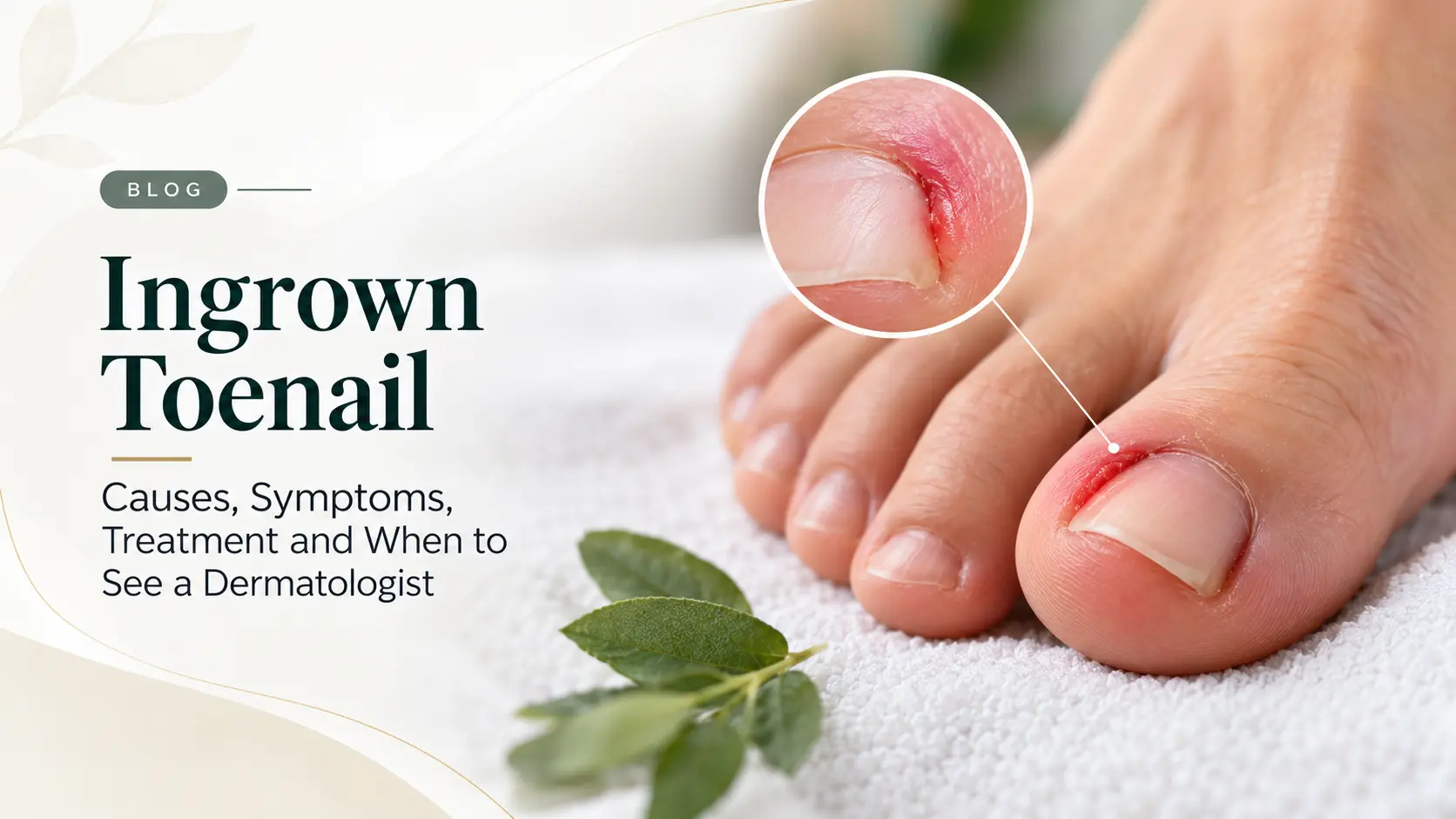
An ingrown toenail occurs when the edge or corner of a toenail grows into the surrounding skin instead of growing normally over the skin.
It most commonly affects the big toe, although other toes can also be involved.
As the nail presses into the surrounding skin, it can cause irritation and inflammation. In some cases, the area can become infected.
SkinVive provides dermatological evaluation for different nail conditions, including ingrown toenails, nail infections, nail psoriasis and other nail problems.
What Are the Symptoms of an Ingrown Toenail?
Common symptoms include:
- Pain along one or both sides of the toenail
- Tenderness around the nail
- Redness
- Swelling
- Increased sensitivity when wearing shoes
- Skin growing around the nail edge
- Fluid or discharge
- Bleeding in some cases
- Increasing pain when walking
Early symptoms may be relatively mild, but persistent pressure from the nail can make the surrounding skin increasingly irritated.
What Causes Ingrown Toenails?
Several factors can contribute to an ingrown toenail.
Cutting the Nails Too Short
Cutting toenails extremely short or rounding the corners too deeply can encourage the nail edge to grow into the surrounding skin.
Avoid cutting aggressively into the corners of the toenail.
Wearing Tight Shoes
Shoes that place repeated pressure on the toes can push the nail against the surrounding skin.
This may be particularly noticeable when footwear is narrow around the front of the foot.
Toenail Injury
An injury to the nail can change the way it grows and may increase the risk of an ingrown toenail.
Naturally Curved Nails
Some people naturally have more curved toenails, which may make them more susceptible to ingrown nails.
Repeated Pressure
Activities that repeatedly put pressure on the toes may also contribute to the problem.
Can an Ingrown Toenail Get Infected?
Yes.
When the nail repeatedly breaks or irritates the surrounding skin, bacteria can enter the damaged area.
Signs that may suggest infection include:
- Increasing redness
- Increasing swelling
- Pus or discharge
- Significant tenderness
- Warmth around the affected area
- Pain that continues to worsen
If these symptoms develop, professional medical evaluation is appropriate.
Can You Treat an Ingrown Toenail at Home?
Mild cases without significant infection may sometimes improve with simple care.
Some general measures include:
- Keeping the foot clean and dry
- Wearing comfortable footwear with enough room around the toes
- Avoiding cutting deeply into the affected nail corner
- Avoiding repeated pressure on the painful toe
- Monitoring the area for worsening pain, swelling or discharge
However, home care is not appropriate for every ingrown toenail.
If the pain is significant, the problem keeps returning, or infection is suspected, a dermatologist or other qualified medical professional should evaluate it.
Should You Cut Out the Ingrown Part Yourself?
It is better to avoid digging into the nail or attempting to cut out a deeply embedded nail corner yourself.
Doing so can further injure the surrounding skin and may increase irritation or infection risk.
Instead, a dermatologist can assess how deeply the nail is embedded and determine whether conservative treatment or a minor procedure is appropriate.
When Should You See a Dermatologist?
Consider professional evaluation if:
- The pain is persistent or worsening
- The toe is significantly swollen
- There is pus or discharge
- The surrounding skin is increasingly red
- Walking becomes uncomfortable
- The nail repeatedly becomes ingrown
- Home care does not improve the problem
- The nail is severely curved or deformed
- You have another condition that may affect wound healing or infection risk
Persistent pain around the nail edge, a nail growing into the surrounding skin, or recurrent swelling and infection are all reasons to consider a dermatology evaluation. SkinVive’s Nail Conditions page covers these concerns and explains how nail problems are evaluated.
How Is an Ingrown Toenail Treated?
Treatment depends on the severity of the condition.
For a mild case, a dermatologist may recommend appropriate nail and foot-care measures and monitor the area.
For more persistent or severe cases, treatment may involve a minor procedure to address the portion of the nail that is growing into the surrounding skin.
SkinVive offers Nail Treatments that include treatment options for ingrown nails and other painful or persistent nail conditions.
The appropriate approach depends on the nail, the surrounding skin, the severity of inflammation and whether infection is present.
Is Ingrown Toenail Treatment Painful?
The level of discomfort depends on the severity of the condition and the treatment required.
When a minor procedure is necessary, local anaesthesia may be used to reduce discomfort during the procedure.
SkinVive’s nail treatment information explains that many minor nail procedures are performed under local anaesthesia to minimise discomfort during treatment.
Your dermatologist can explain the procedure and expected recovery based on your individual condition.
How Can You Prevent Ingrown Toenails?
Once an ingrown toenail has improved, sensible nail and footwear habits may help reduce recurrence.
Cut Toenails Carefully
Avoid cutting the nails extremely short or digging deeply into the corners.
Choose Comfortable Footwear
Wear shoes that provide sufficient room around the toes and do not repeatedly press against the nail.
Keep Feet Clean and Dry
Good foot hygiene can help maintain healthy skin around the nails.
Avoid Picking at the Nail
Repeatedly manipulating the nail edge can irritate the surrounding skin.
Address Recurrent Problems
If the same toenail repeatedly becomes ingrown, professional assessment can help identify contributing factors and determine whether a more lasting treatment approach is appropriate.
Can an Ingrown Toenail Come Back?
Yes.
Ingrown toenails can recur, particularly when factors such as nail shape, footwear pressure or nail-cutting habits continue.
If the problem repeatedly affects the same toe, it is worth discussing the recurrence with a dermatologist rather than repeatedly treating each episode at home.
Ingrown Toenail vs Nail Fungus
Ingrown toenails and fungal nail infections are different conditions, although a person can potentially experience both.
An ingrown toenail mainly causes problems around the edge of the nail, such as pain, tenderness, redness and swelling.
Nail fungus more commonly causes changes to the nail itself, such as thickening, discoloration, brittleness or crumbling.
If you are unsure whether a painful or abnormal toenail is caused by an ingrown nail, fungal infection or another condition, professional examination can help determine the cause.
You can also read our guide to nail fungus symptoms, early signs and causes to understand how fungal nail infections can differ from other nail problems.
Why Accurate Diagnosis Matters
Not every painful or abnormal toenail is an ingrown toenail.
Nail trauma, infection, inflammatory nail conditions and other disorders can sometimes produce similar symptoms.
A dermatologist can examine the nail and surrounding skin and determine whether conservative care, medication or a minor procedure is appropriate.
At SkinVive, nail disorders are evaluated before treatment is selected, with additional testing considered when needed.
You can also learn more about Dr. Karishni Chittarvu and her approach to personalised dermatology care.
Ingrown Toenail Treatment in Hyderabad
If an ingrown toenail is causing persistent pain, swelling or recurrent problems, professional evaluation can help determine the appropriate treatment.
SkinVive by Dr. Karishni Chittarvu provides dermatologist-led care for nail conditions for patients from Kavadiguda, Gandhi Nagar and across Hyderabad.
The clinic’s Nail Treatments service includes treatment options for ingrown nails and other painful or persistent nail conditions.
If you are experiencing persistent toenail pain or recurrent ingrown nails, a professional assessment can help determine the most appropriate treatment.
Frequently Asked Questions
What is the main cause of an ingrown toenail?
Common contributing factors include cutting the nail too short or into the corners, tight footwear, nail injury, repeated pressure and naturally curved nails.
Can an ingrown toenail heal on its own?
A mild case may sometimes improve with appropriate foot and nail care. However, persistent, recurrent or infected ingrown toenails may require professional treatment.
How do I know if my ingrown toenail is infected?
Increasing redness, swelling, warmth, significant pain or pus-like discharge may indicate infection and should be assessed by a medical professional.
Should I cut the corner of an ingrown toenail?
Avoid digging into or aggressively cutting the embedded nail corner yourself. This can further irritate the surrounding skin.
Can tight shoes cause ingrown toenails?
Yes. Repeated pressure from narrow or tight footwear can contribute to irritation around the nail and may increase the risk of an ingrown toenail.
Does an ingrown toenail require surgery?
Not every ingrown toenail requires a procedure. Mild cases may respond to conservative care, while severe or recurrent cases may require a minor nail procedure.
How long does an ingrown toenail take to heal?
Recovery varies depending on the severity and treatment. A mild case may settle with appropriate care, while recovery after a procedure depends on the extent of treatment and individual healing.
Can an ingrown toenail come back after treatment?
Yes. Recurrence is possible, especially when the underlying contributing factors continue. Proper nail care and suitable footwear may help reduce the risk.
Final Takeaway
An ingrown toenail may begin as mild tenderness but can progress to significant pain, swelling or infection if the nail continues to press into the surrounding skin.
Avoid repeatedly digging into the nail or cutting deeply into the affected corner. If symptoms persist, recur or become associated with swelling or discharge, a dermatologist can assess the nail and recommend appropriate treatment.
For patients in Kavadiguda, Gandhi Nagar and Hyderabad, SkinVive by Dr. Karishni Chittarvu provides personalised dermatology care for ingrown toenails and other nail conditions.
Explore Nail Treatments at SkinVive or get directions to the SkinVive clinic on Google Maps.
Leave a Reply