
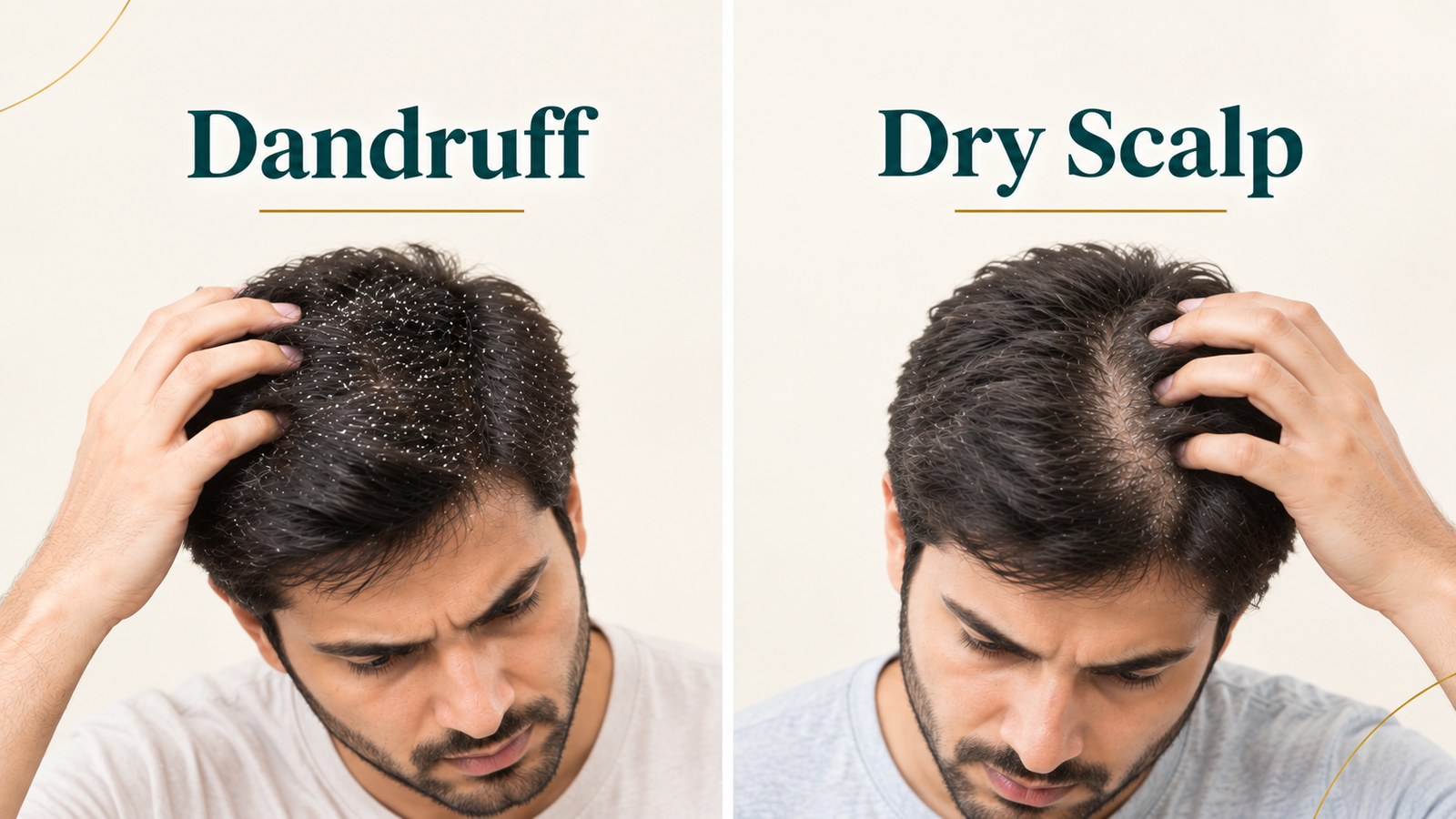
Seeing white flakes on your shoulders or noticing an itchy scalp does not always mean you have dandruff. A dry scalp and dandruff can look similar, but they can have different underlying causes and may require different approaches to care.
Understanding the difference can help you avoid using unnecessary products and recognise when it is time to consult a dermatologist.
What Is the Difference Between Dandruff and a Dry Scalp?
The main difference is that dry scalp is usually related to reduced moisture in the scalp, while dandruff is commonly associated with scalp inflammation and conditions such as seborrheic dermatitis.
Dandruff typically produces flakes and may be associated with itching. Seborrheic dermatitis can cause a flaky scalp together with redness or irritation and may also affect areas such as the eyebrows, ears, beard area or sides of the nose.
A dry scalp, on the other hand, may feel tight, rough or uncomfortable, particularly when exposed to dry weather, hot water or irritating hair-care products.
Because several scalp conditions can cause similar symptoms, appearance alone does not always provide a definite diagnosis.
What Does a Dry Scalp Usually Feel Like?
A dry scalp may have:
- Small, dry-looking flakes
- A feeling of tightness
- Mild itching
- Rough or dry skin
- Increased dryness after hot showers
- Irritation after using harsh shampoos or styling products
Dryness can become more noticeable when the scalp is exposed to cold, dry weather or products that irritate the skin.
Using a gentle hair-care routine and avoiding unnecessary scalp irritation may help.
What Does Dandruff Usually Look Like?
Dandruff commonly causes visible flakes in the scalp and hair. The scalp may also feel itchy.
In some people, the flakes can appear white or grey, while seborrheic dermatitis may produce dry or greasy scales together with inflammation.
Dandruff itself is common and is not caused simply by poor hygiene. However, persistent or severe flaking may sometimes be related to an underlying scalp condition that needs medical assessment.
Dandruff vs Dry Scalp: Quick Comparison
| Feature | Dry Scalp | Dandruff |
|---|---|---|
| Main concern | Reduced moisture or irritation | Flaking associated with scalp condition |
| Flakes | Usually smaller and dry | May be more noticeable and recurrent |
| Itching | Possible | Common |
| Scalp redness | Less typical | May occur, especially with seborrheic dermatitis |
| Oily or greasy scales | Usually uncommon | Can occur with seborrheic dermatitis |
| Other affected areas | Usually limited to dry skin | May also affect eyebrows, ears, beard or face |
| Professional evaluation | Needed if persistent or severe | Recommended if persistent, severe or associated with inflammation |
It is important to remember that this comparison is only a general guide. Several scalp disorders can produce similar symptoms.
What Causes Dandruff?
Dandruff can be associated with changes affecting the scalp’s natural skin environment. One common condition associated with dandruff is seborrheic dermatitis.
Factors that may contribute to or worsen scalp flaking include:
- Seborrheic dermatitis
- Stress
- Cold or dry weather
- Irritating hair-care products
- Certain scalp conditions
- Excess oil production
Dandruff can also occur without the more extensive inflammation seen in seborrheic dermatitis.
Can Dry Scalp Become Dandruff?
Dryness and dandruff are not simply two stages of the same condition.
A person with a dry scalp can experience flaking, but that does not automatically mean they have dandruff. Similarly, dandruff may cause flakes even when the scalp does not feel generally dry.
This is why repeatedly changing shampoos without understanding the cause may not solve the problem.
Is It Dandruff or Seborrheic Dermatitis?
Dandruff and seborrheic dermatitis are closely related, but they are not exactly the same.
Seborrheic dermatitis can cause:
- Flaking
- Itching
- Redness or discolouration
- Greasy or dry scales
- Irritation
- Symptoms around the eyebrows, ears, nose, beard or other oily areas
If you have persistent scalp flaking along with redness, significant itching or similar scaling on other parts of the face or body, a dermatologist can assess whether seborrheic dermatitis or another skin condition may be involved.
You can learn more about the scalp conditions treated at SkinVive through our Hair Conditions service.
How Can You Care for a Flaky or Dry Scalp?
The right routine depends on the cause, but some general measures can help reduce irritation.
1. Avoid very hot water
Hot showers can increase scalp dryness and irritation. Use comfortably warm water instead.
2. Choose hair products carefully
Harsh or strongly fragranced products may irritate a sensitive scalp. If a particular shampoo or styling product consistently causes burning or itching, consider stopping it and discussing the symptoms with a dermatologist.
3. Avoid excessive scratching
Scratching may temporarily relieve itching but can further irritate the scalp and potentially damage the skin.
4. Do not keep changing treatments unnecessarily
Different causes of scalp flaking require different approaches. If a problem keeps returning despite basic care, finding the underlying cause is more useful than repeatedly switching products.
5. Follow a dermatologist-recommended treatment plan when needed
For persistent dandruff or seborrheic dermatitis, a dermatologist may recommend an appropriate medicated shampoo or other treatment depending on the diagnosis.
Treatment should be selected according to the individual’s scalp condition rather than simply choosing the strongest anti-dandruff product available.
When Should You See a Dermatologist for Dandruff or Dry Scalp?
Consider a dermatology consultation if:
- Flaking continues despite appropriate scalp care
- Your scalp becomes very itchy
- There is noticeable redness or swelling
- You develop painful or crusted areas
- Scaling spreads to your face, eyebrows or ears
- You notice patchy hair loss
- The scalp problem keeps returning
- You are unsure whether the problem is dandruff, dryness or another scalp condition
Persistent scalp symptoms can sometimes be caused by conditions such as seborrheic dermatitis, eczema, psoriasis, fungal infections or other disorders that require a different treatment approach.
Dandruff and Hair Fall: Is There a Connection?
Dandruff itself does not necessarily mean that you will develop permanent hair loss.
However, an inflamed or irritated scalp can lead to significant itching and scratching. Some scalp disorders can also affect the normal hair-growth environment.
If you are experiencing both persistent scalp flaking and noticeable hair shedding, it is useful to have both concerns evaluated rather than assuming that dandruff is the only cause.
SkinVive also provides personalised evaluation for hair and scalp concerns. You can read our existing article on common causes of hair fall and when to see a dermatologist.
Why Professional Diagnosis Matters
A flaky scalp is a symptom, not a diagnosis.
Two people can have similar-looking flakes but completely different underlying causes. A dermatologist can examine the scalp, review the patient’s history and identify whether the symptoms are more consistent with dandruff, seborrheic dermatitis, eczema, psoriasis, infection or another condition.
At SkinVive, Dr. Karishni Chittarvu focuses on accurate evaluation and personalised dermatology care rather than a one-size-fits-all approach.
You can also learn more about Dr. Karishni Chittarvu and her dermatology approach.
Dandruff Treatment in Hyderabad
If you have persistent dandruff, scalp itching or recurring flakes, professional evaluation can help identify the underlying cause and guide appropriate treatment.
SkinVive by Dr. Karishni Chittarvu provides dermatology care for patients in Kavadiguda, Gandhi Nagar and across Hyderabad, including evaluation of hair and scalp conditions.
Rather than treating every flaky scalp in the same way, treatment can be selected according to the actual condition affecting your scalp.
Frequently Asked Questions
Is dandruff the same as a dry scalp?
No. They can produce similar-looking flakes, but dry scalp is generally associated with reduced moisture or irritation, while dandruff is commonly associated with scalp flaking and conditions such as seborrheic dermatitis.
How can I tell if I have dandruff or a dry scalp?
Dryness often causes a tight or dry feeling with small flakes. Dandruff may cause more persistent flaking and itching, and seborrheic dermatitis can cause redness or greasy scales. However, a dermatologist may be needed for an accurate diagnosis.
Can dandruff cause hair loss?
Dandruff does not automatically cause permanent hair loss. However, persistent scalp inflammation and repeated scratching can irritate the scalp. Hair loss occurring alongside persistent scalp symptoms should be evaluated.
Should I use anti-dandruff shampoo for a dry scalp?
Not necessarily. If the main problem is simple dryness, an anti-dandruff product may not address the underlying issue. The appropriate product depends on the cause of the flaking.
When should I see a dermatologist for dandruff?
See a dermatologist if dandruff is persistent, severe, associated with significant itching or redness, spreads to other areas, or does not improve with appropriate basic care.
Can dandruff come back after treatment?
Yes. Conditions such as seborrheic dermatitis can have recurring flare-ups. Long-term management may sometimes be needed depending on the underlying condition.
Final Takeaway
Dandruff and dry scalp are not always the same thing. Both can cause flakes and itching, but the underlying causes can differ.
If your scalp remains flaky, itchy or irritated despite basic care, avoid repeatedly experimenting with products. A dermatologist can assess the scalp and determine whether you are dealing with simple dryness, dandruff, seborrheic dermatitis or another scalp condition.
For patients in Kavadiguda, Gandhi Nagar and Hyderabad, SkinVive by Dr. Karishni Chittarvu offers personalised dermatology evaluation for skin, hair and scalp concerns.
Book a consultation with SkinVive or get directions to the clinic on Google Maps.
Leave a Reply